
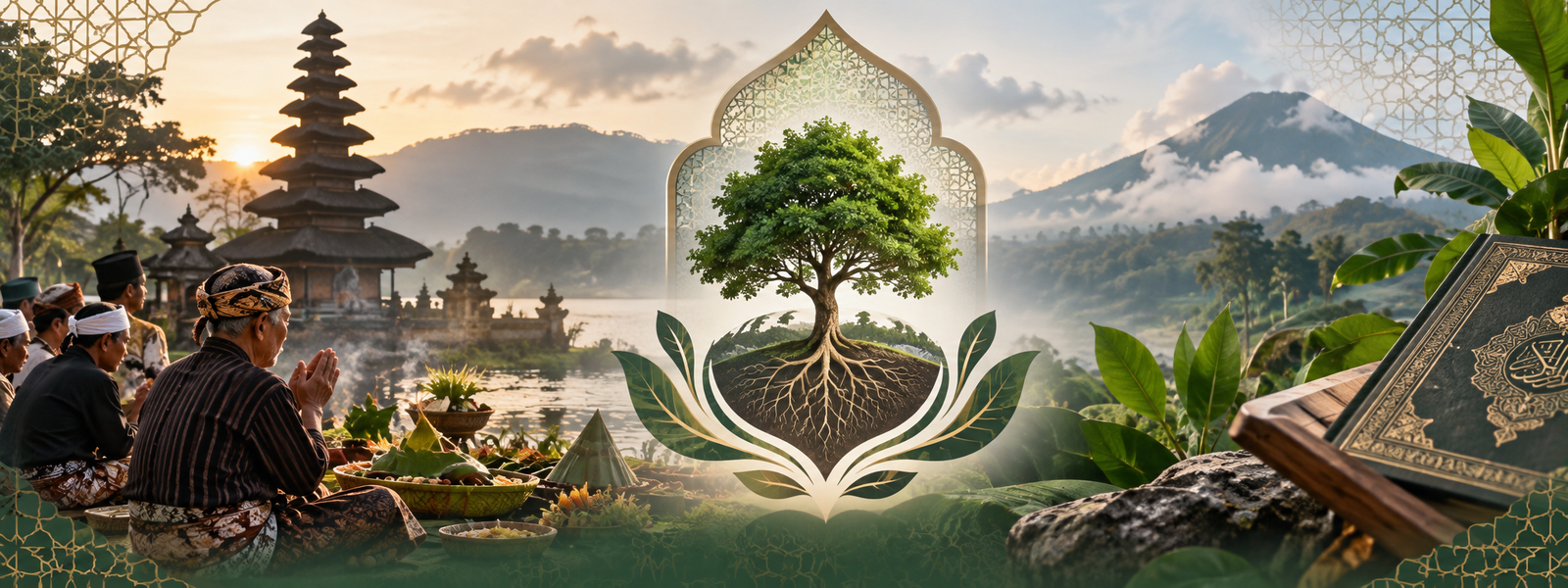
Sustainable Local Wisdom-Based Learning at Pesantren: An Integrative Model Aligned with the Sustainable Development Goals
Keywords:
Islamic boarding school, Local wisdom, Sustainable development, Integrative model, Character educationThis study investigates an integrative innovation model bridging local wisdom curricula with Sustainable Development principles in Islamic boarding school (pesantren) education in Indonesia. Grounded in a qualitative ethnographic approach, this research was conducted across five pesantren: Walisongo (North Lampung), Al-Kayyis (Banten), Al-Mahalli (Yogyakarta), Al-Hasan (Ponorogo), and Darul Hikam Bendo (Kediri). The forms of local wisdom examined -- including gotong royong, piil pesenggiri, agrarian culture, social ethics, and digital creativity, are analysed in relation to the United Nations Sustainable Development Goals (SDGs), particularly SDG 4 (Quality Education), SDG 8 (Decent Work and Economic Growth), SDG 9 (Industry, Innovation and Infrastructure), SDG 11 (Sustainable Cities and Communities), SDG 13 (Climate Action), SDG 15 (Life on Land), SDG 16 (Peace, Justice and Strong Institutions), and SDG 17 (Partnerships for the Goals). Data analysis employed Folk Development Analysis (FDA), identifying elements of local wisdom, their internalization processes, and interpretative outcomes. The findings demonstrate that these five pesantren have successfully constructed a Sustainable Local Wisdom-Based Learning (SLWBL) framework resting on three pillars: (1) strengthening local values within the formal curriculum, (2) a contextually grounded social approach responsive to students' lived realities, and (3) methodological innovations aligned with digital-era demands. The implications point toward the formation of an educationally resilient, culturally adaptive, and sustainability-oriented student character, a contribution to both national character development and the global sustainable development agenda.
- Abas, M. C. (2024). Strengthening the reputation of Islamic boarding schools: The role of leadership, educational innovation, and local wisdom. Managere: Indonesian Journal of Educational Management, 6(3), 331–346.
- Abrori, M. S., & Hadi, M. S. (2020). Integral values in madrasah: To foster community trust in education. Istawa: Jurnal Pendidikan Islam, 5(2), 160. https://doi.org/10.24269/ijpi.v5i2.2736
- Al, N., Albab, A. U., & Huda, M. (2025). Revitalization of local religious traditions in Islamic education. Journal of Malay Islamic Studies (JMIS), 7(1), 1–11.
- Anta, P., Sampurna, C., & Susanto, R. (2025). Implementation of STEAM in pesantren experimental study based on local wisdom curriculum. JISEI, 1(2), 256–272.
- Birhan, W., et al. (2021). Exploring the context of teaching character education to children in preprimary and primary schools. Social Sciences and Humanities Open, 4(1), 100171.
- Creswell, J. W. (2018). Research design: Qualitative, quantitative, and mixed methods approaches. Sage Publications.
- Fahrudin, A., & Malik, M. K. (2025). A pesantren cultural value-based learning model: Integrating Islamic values and 21st-century skills. Cendekia, 23(1), 89–105.
- Hadi, Y. S. (2002). Metodologi penelitian kualitatif untuk ilmu-ilmu sosial dan pendidikan: Pendekatan folk development analysis. Pustaka Pelajar.
- Hamami, T., & Nuryana, Z. (2022). A holistic-integrative approach of the Muhammadiyah education system in Indonesia. HTS Teologiese Studies, 78(4), 1–10.
- Herdiyanti, Y., Janah, M., & Susanto, R. (2025). Building a golden generation: Synergy of education, technology, and Qur'anic values. JISEI, 1(1), 36–48.
- Hermino, A., & Arifin, I. (2020). Contextual character education for students in the senior high school. European Journal of Educational Research, 9(3), 1009–1023.
- Hidayah, L. N. (2023). The role of Islamic boarding schools in improving community religiosity values in the era of globalization. ICIS, 6(1), 315–327.
- Huberman, A. M., & Saldaña, J. (2014). Qualitative data analysis: A methods sourcebook. Arizona State University.
- Jaenullah, J., Utama, F., & Setiawan, D. (2022). Resilience model of the traditional Islamic boarding school education system. Jurnal Kependidikan, 8(4), 931.
- Miles, M. B., & Huberman, A. M. (1994). Qualitative data analysis. Sage Publications.
- Moh, F. H. (2020). The role of Islamic boarding school in improving the quality of Islamic education in schools. IJIBS, 20(1), 173–197.
- Mujahid, I. (2021). Islamic orthodoxy-based character education: Creating moderate Muslim in a modern pesantren in Indonesia. Indonesian Journal of Islam and Muslim Societies, 11(2), 185–212.
- Munawaroh, H., Mubtadik, M. A., & Rahmania, N. (2024). Assisting santri communities in enhancing understanding of Surah Yasin and Tahlil recitation. Bimbingan Swadaya Masyarakat, 5(6), 232–245.
- Musaddad, A. (2023). Transformation of Islamic boarding schools as Islamic education institutions in Indonesia. Journal of Islamic Education Research, 4(1), 73–82.
- Najib, M., & Al Adib. (2025). Local wisdom-based curriculum of English language: Bridging language and culture in Indonesian Madrasah Tsanawiyah. Ta'dib, 7(1), 1–34.
- Nasution, S., et al. (2025). Empowering santri well-being: Integrating spiritual practices and SEL in pesantren mental health. Cendekia, 23(1), 105–131.
- Pasi, K. M. H., Rasyidin, R., & Harahap, R. M. (2020). Education system of modern Islamic boarding school in the postmodern era. Nazhruna, 3(3), 311–323.
- Ramadani, D. R., & Fitrisia, A. (2023). The character education implementation and local wisdom values in learning history. IRJE, 7(1), 196–206.
- Rukajat, A. (2018). Pendekatan penelitian kualitatif. CV Budi Utama.
- Spradley, J. P. (1979). The ethnographic interview. Rinehart & Winston.
- Sutrisno, M. (2011). Kearifan lokal: Menembus globalisasi melalui tradisi. Kanisius.
- Taufikin. (2021). Integrating local wisdom in transformative Islamic education. Misykat, 10(1), 167–186.
- Tsoraya, N. D., Primalaini, O., & Asbari, M. (2022). The role of Islamic religious education on the development youths' attitudes. JISMA, 1(1), 12–18.
- UNESCO. (2017). Education for sustainable development goals: Learning objectives. UNESCO.
- United Nations. (2015). Transforming our world: The 2030 agenda for sustainable development. United Nations.
- Yahuda, R. D., et al. (2024). Totally Muslim truly intellectual-based holistic education in postgraduate programs. Qalamuna, 16(2), 1399–1410.